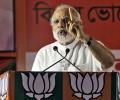
While many promises remain unrealised, power reforms and the creation of tens of millions of new bank accounts have helped Modi maintain his popularity

Slowing inflation prompted the RBI to cut the policy repurchase rate last month by 25 basis points to 6.50 percent, the lowest since 2011.

The inflation target of the RBI would be reviewed once every five years.

India's $121 billion troubled debt pile, over $100 billion of which is on the books of state-owned banks, has come under close scrutiny from prosecutors, the media and politicians

To meet the target, agriculture must grow at 15% compared to average of below 2% over the past four years

After months of denying there was a liquidity problem, Governor Raghuram Rajan has reversed course.

Monsanto has taken the government to court over the royalty.
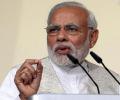
India's exports shrank in January for the 14th straight month on continued weak demand from Europe

Three policymakers aware of the central bank's deliberations on the Budget said they are combing through the numbers to test how Jaitley struck a balance, and question some of the assumptions.
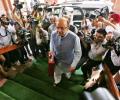
A strong showing will be vital to Narendra Modi's chances of a second term.

Prime Minister Narendra Modi's landslide election in 2014 raised hopes he would draw a line under India's socialist past, cut welfare and reduce the government's role in business.

Markets hope the Budget will steer spending towards infrastructure.

RBI Governor Raghuram Rajan wanted to improve training for staff, through initiatives such as sending them to other central banks for short stints.

The slowdown is especially pronounced in rural areas, which have suffered two consecutive dry years.
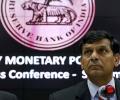
The government plans to inject a total Rs 70,000 crore into the lenders over four years
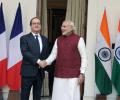
French companies have invested more than $1 billion per year in India.

Government is expected to rely more on divestment proceeds to keep the fiscal deficit in check

Urjit Patel's reappointment will raise market hopes that Rajan, will also be offered an extension when his tenure ends in September.
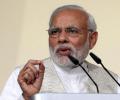
The Prime Minister tends to keep such decisions close to his chest.

India is more insulated to Fed-related volatility than other emerging markets due to its better economic fundamentals
 © 2026 Rediff.com - Advertise with us - Disclaimer - Privacy Policy - Sitemap - Feedback - About us - Terms of use - Grievances